Gravel guide
Which Gravel Is Best? The Right Gravel for Every Project
Driveway, path, patio or drainage: the best gravel depends on the job. Here is which stone to pick, what size, how deep, and what to avoid.
Quick answer: There is no single best gravel. For a driveway, use crusher run as the base and #57 crushed stone on top. For a walkway, use 3/8 inch crushed stone or decomposed granite. For drainage, use clean #57 stone. For a patio or play area, pea gravel is the most comfortable. Under a slab, shed or pavers, use compacted crusher run.
Most people ask which gravel is best after they have already had a bad experience: a driveway that turned to ruts, a path full of stones that stick in shoes, or a drain that clogged. Nearly every one of those problems comes from using the right amount of the wrong stone. This guide matches each common project to the gravel that works, based on how the stone behaves on real jobs.
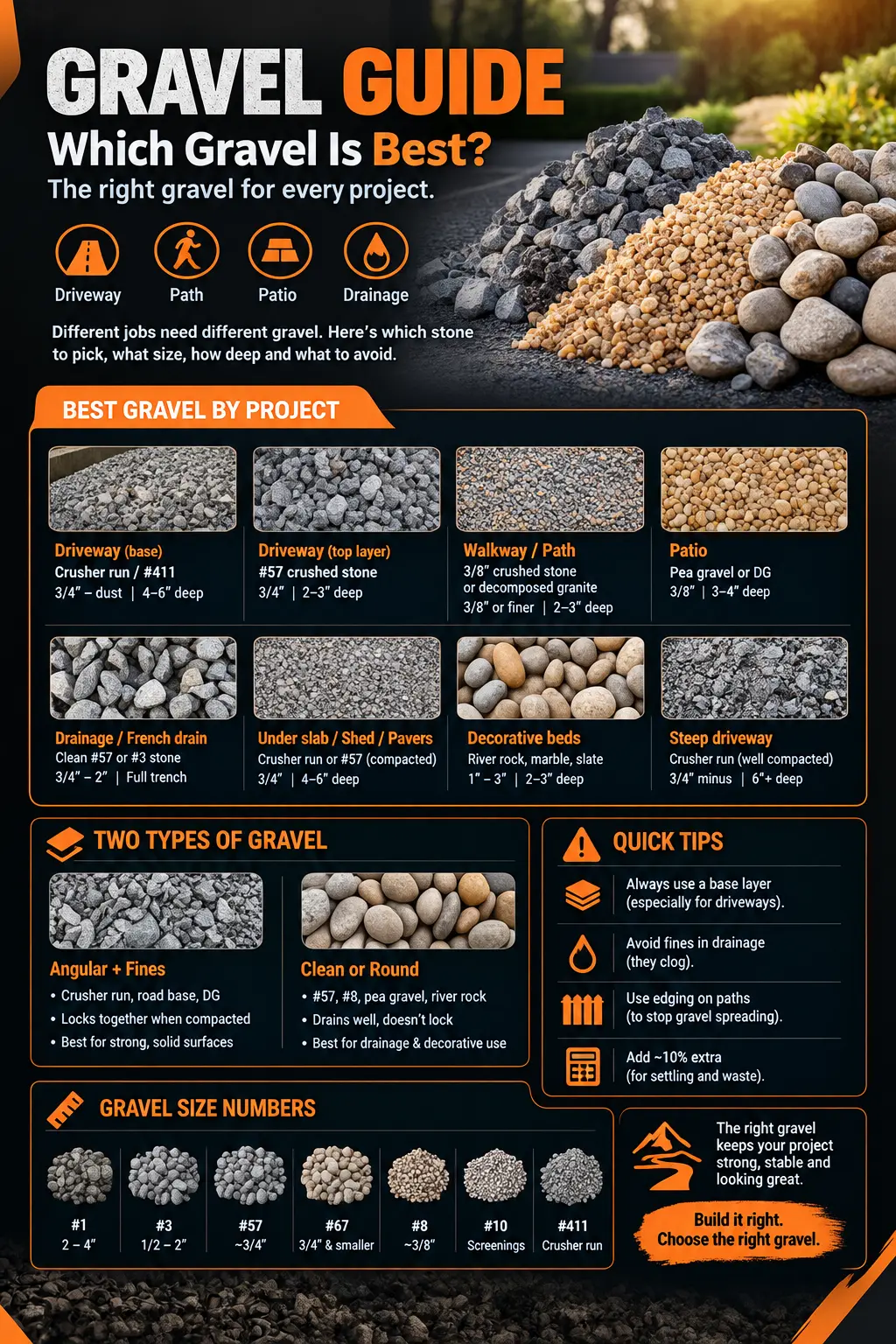
Quick Pick: Best Gravel by Project
| Project | Best gravel | Size | Depth |
|---|---|---|---|
| Driveway base | Crusher run / #411 / road base | 3/4 in down to dust | 4 to 6 in |
| Driveway top layer | #57 crushed stone | 3/4 in | 2 to 3 in |
| Walkway or garden path | 3/8 in crushed stone or decomposed granite | 3/8 in or finer | 2 to 3 in |
| Patio or seating area | Pea gravel or decomposed granite | 3/8 in | 3 to 4 in |
| Drainage or French drain | Clean #57 or #3 stone | 3/4 to 2 in | Full trench |
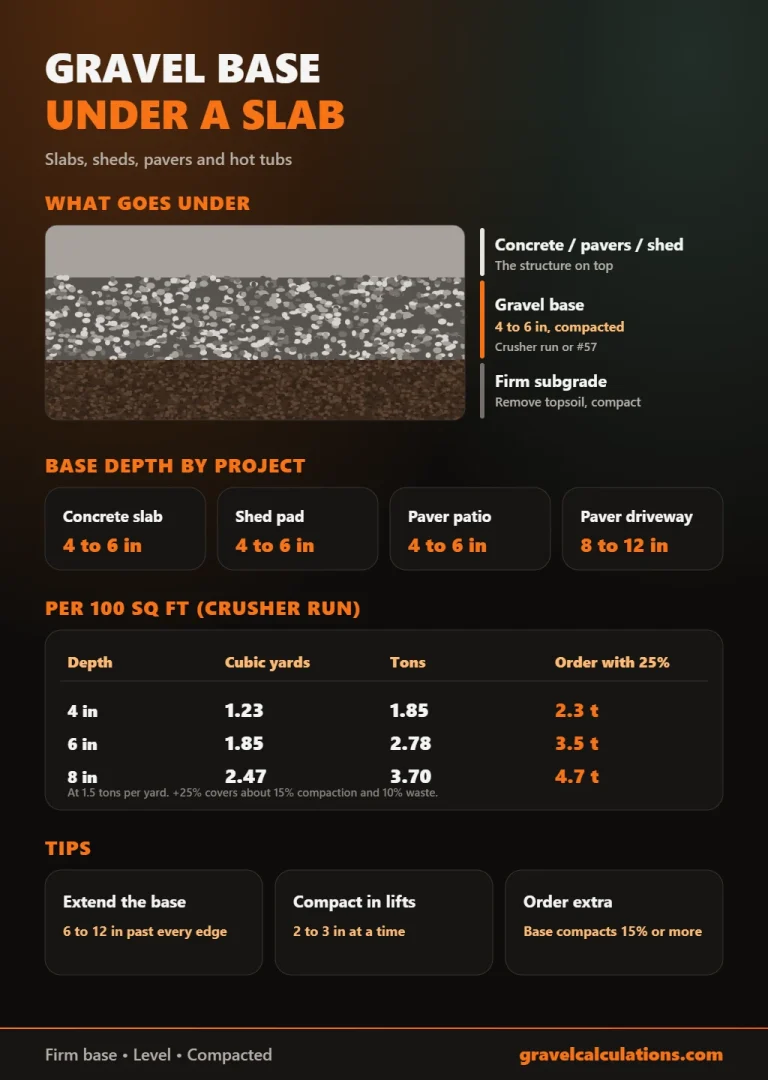
| Under a slab, shed or pavers | Crusher run or #57, compacted | 3/4 in | 4 to 6 in |
| Decorative beds | River rock, marble chips, slate | 1 to 3 in | 2 to 3 in |
| Steep driveway | Crusher run, well compacted | 3/4 in minus | 6 in + |
Once you know the stone, use our gravel calculator to work out how many yards, tons or bags to order for your space.
The One Rule That Decides Which Gravel Is Best
Every gravel falls somewhere between two types. Knowing which one your job needs answers most of the question. Landscapers and homeowners argue about this all the time, as you can see in the great gravel debate on r/landscaping, but the split below settles most of it.
- Angular stone with fines (crusher run, 3/4 inch minus, road base, decomposed granite): crushed rock plus stone dust. When it is compacted, the dust fills the gaps and the sharp edges lock together into a hard surface. Best for anything that must stay firm: driveway bases, parking areas, shed pads and slab bases.
- Clean or round stone (#57, #8, pea gravel, river rock): washed stone with no dust. Water drains straight through, but the stones never lock together, and round ones roll. Best for drainage, top layers and decorative areas.
Real-world warning: a common story on home improvement forums is someone laying 4 or 5 inches of clean #8 stone as a driveway. It never packs down, and more than about an inch of it feels like driving on beach sand. Clean stone belongs on top of a compacted base, not instead of one.
Best Gravel for a Driveway
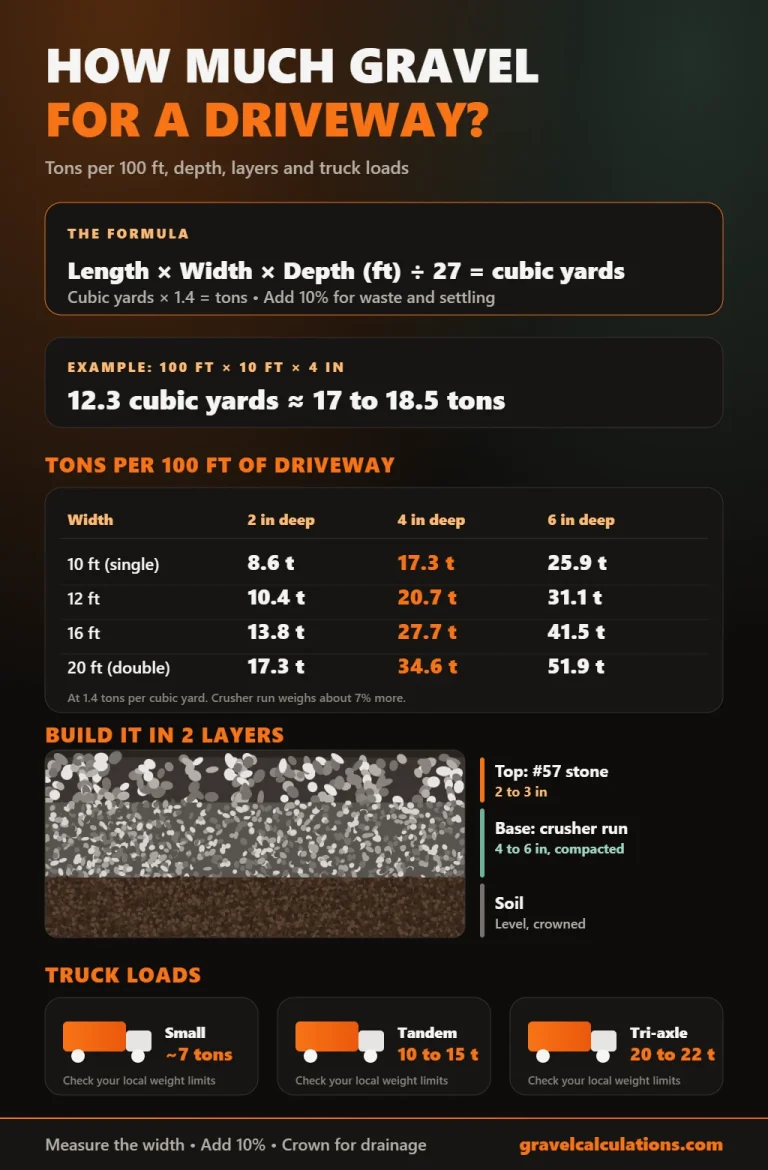
A good gravel driveway is built in two layers, not one.
Base layer: crusher run
Crusher run (also called crush and run, #411, road base, DGA, class 5 gravel, or MOT Type 1 in the UK) is crushed stone mixed with stone dust. Lay 4 to 6 inches, wet it lightly and compact it. It sets almost like a soft concrete and stops the driveway sinking and rutting.
Top layer: #57 crushed stone
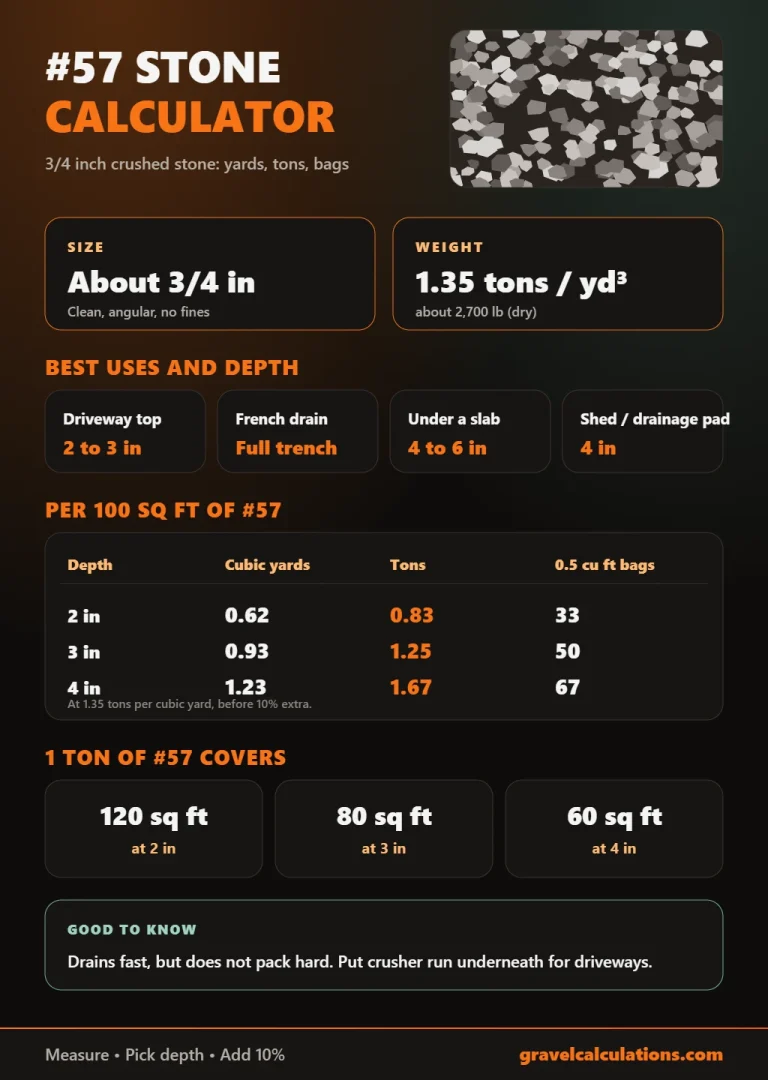
#57 stone is about 3/4 inch, angular and washed. A 2 to 3 inch layer on top gives grip, drains rain away and looks clean. It is the most popular driveway stone in the US for good reason.
Avoid on driveways
- Pea gravel and river rock: round stones roll under tyres and get pushed onto the lawn.
- Thick layers of clean small stone (#8, #10): they never firm up.
- Anything without a base: even good stone sinks into soft soil.
Steep driveways: use crusher run and compact it well, because the fines help hold it on the slope. Add a crown so the middle is higher than the edges, and divert water off the top of the hill. Loose stone on a steep drive washes down in heavy rain.
The Driveway tab in our calculator works out the base and the top layer separately, so you can order the right amount of each.
Best Gravel for Walkways and Garden Paths
For paths, you want stone that is comfortable underfoot and does not scatter. The best choices are:
- 3/8 inch crushed stone: small enough to walk on comfortably, angular enough to stay put. Crushed stone with some fines packs down best.
- Decomposed granite (DG): a fine, sandy gravel that compacts into a smooth, firm surface. Good for wheelchairs, strollers and wheelbarrows. Stabilized DG holds even better.
- Pea gravel: the softest to walk on, but it shifts and spreads. Use it only with solid edging.
Landscapers often steer people away from very small stone on busy paths because it sticks in shoe treads and gets carried indoors. Whatever you choose, use 2 to 3 inches over landscape fabric and install edging (steel, brick or timber) to keep it in place.
Best Gravel for a Patio
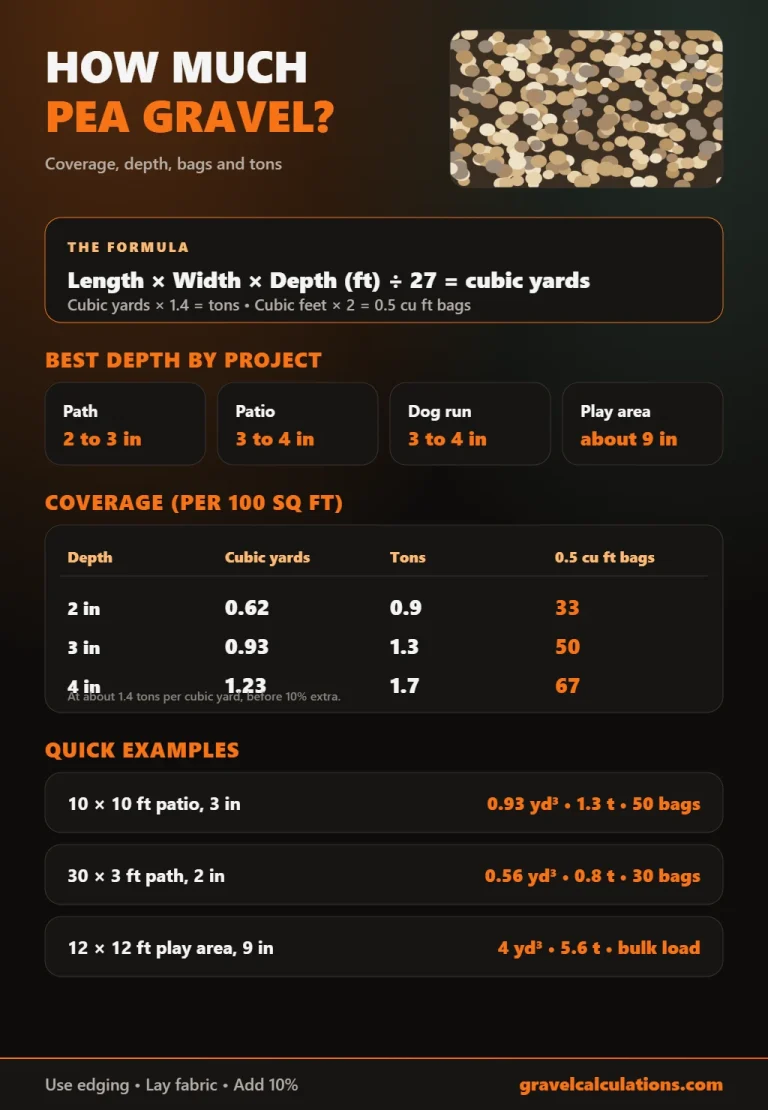
Pea gravel is the classic patio gravel: smooth, comfortable, good-looking and easy to rake level. Lay 3 to 4 inches over a compacted base. If you want a firmer surface for chairs and tables that do not sink, choose decomposed granite instead, or a thin layer of pea gravel over a compacted crusher run base.
Best Gravel for Drainage and French Drains
For drainage, the best gravel is clean, washed, angular stone with no fines. #57 stone (3/4 inch) is the standard choice for French drains, downspout drains and dry wells, and #3 stone (1/2 to 2 inches) is used for larger drains.
- Wrap the trench in filter fabric so soil does not wash in and clog the gaps.
- Never use crusher run or any stone with dust for drainage. The fines fill the gaps and stop the water.
- Avoid pea gravel in drains that carry a lot of water. It works, but the round stones pack tighter and can shift around the pipe.
Best Gravel Under a Concrete Slab, Shed or Pavers
Under anything heavy, the gravel must compact into a solid, level base.
- Concrete slab or patio: 4 to 6 inches of compacted crusher run, or #57 stone where drainage under the slab matters.
- Shed or hot tub pad: 4 to 6 inches of compacted crusher run, extending about 1 foot past the shed on each side.
- Pavers: 4 inches of compacted paver base (crusher run) for paths and patios, 6 to 8 inches where cars drive, then a 1 inch sand or fine screenings bed.
Best Gravel for Decorative Beds and Landscaping
For flower beds, borders and dry creek beds, looks matter more than strength. Popular choices are river rock (smooth and natural), marble chips (bright white), slate chips (dark and modern) and lava rock (very light, good for raised areas). Lay 2 to 3 inches over landscape fabric so weeds do not grow through.
Gravel Size Numbers Explained
In the US, crushed stone is often sold by number. Smaller numbers usually mean bigger stones.
| Stone | Approximate size | Common use |
|---|---|---|
| #1 | 2 to 4 in | Heavy road foundations, erosion control |
| #3 | 1/2 to 2 in | Large drains, driveway base with drainage |
| #57 | About 3/4 in | Driveway top layer, drainage, slab base |
| #67 | 3/4 in and smaller | Slab bases, concrete mixes |
| #8 | About 3/8 in | Paths, top dressing, decorative |
| #10 | Screenings / dust | Paver bedding, filling gaps |
| #411 / crusher run | #57 stone mixed with #10 dust | Compacted base for driveways and pads |
Names vary by region. A supplier may call crusher run “dense grade aggregate”, “road base” or “class 5”. If you are unsure, describe the job and ask for “crushed stone with fines” or “clean washed stone”.
Common Mistakes When Choosing Gravel
- Picking stone by looks alone. Pretty round stone makes a poor driveway.
- Skipping the base. Top stone on bare soil sinks and ruts within a season.
- Using fines where water must drain. Crusher run in a French drain clogs.
- No edging on paths. Gravel walks away into the lawn.
- Ordering the exact amount. Gravel settles and spills, so add about 10%.
How Much Gravel Will You Need?
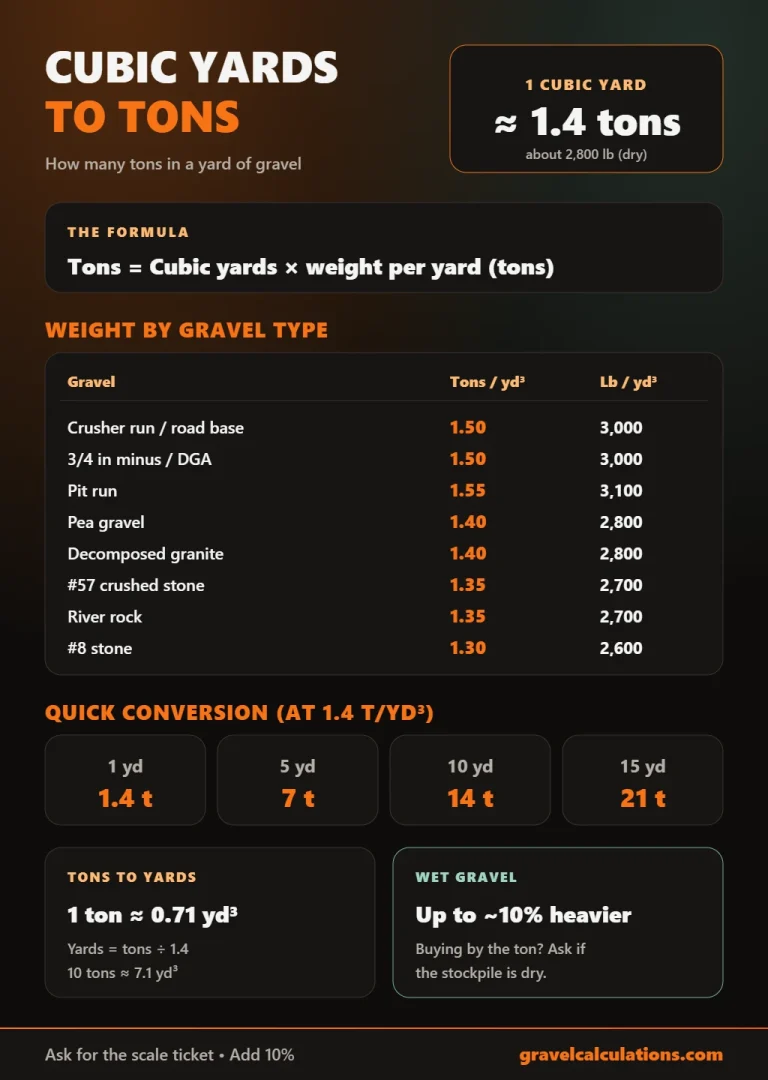
Once you have chosen your stone, the next question is quantity. Weights differ by type: crusher run is heavier per yard than pea gravel, so the same area needs a different number of tons. Our free gravel calculator has all these gravel types built in, adds extra for compaction and waste, and shows the answer in cubic yards, tons, bags and truck loads.
FAQ
Frequently Asked Questions
What is the best all-purpose gravel?
#57 crushed stone is the closest thing to an all-purpose gravel. It is about 3/4 inch, angular, drains well and works as a driveway top layer, a drainage stone and a base under slabs. It is not ideal for barefoot paths, where pea gravel or decomposed granite feel better.
What gravel does not move when you walk or drive on it?
Angular crushed stone with fines, such as crusher run, 3/4 inch minus or decomposed granite, locks together when compacted and moves the least. Round stone like pea gravel and river rock rolls and spreads, especially without edging.
Is pea gravel or crushed stone better for a driveway?
Crushed stone is better. Its sharp edges lock together and carry weight. Pea gravel is round, so it rolls under tyres, ruts and spreads onto the lawn.
What is the cheapest gravel?
Crusher run, pit run and road base are usually the cheapest per ton because they are not washed or screened. Decorative stone such as river rock, marble chips and colored gravel costs the most.
What size gravel is best for drainage?
Clean, washed stone around 3/4 inch to 1 1/2 inch, such as #57 or #3 stone. It has no fines, so water flows through the gaps instead of getting blocked.
Choose Your Gravel, Then Calculate
Get the exact amount to order in cubic yards, tons, cubic metres or bags.